Introduction to Loyalty Program Integration
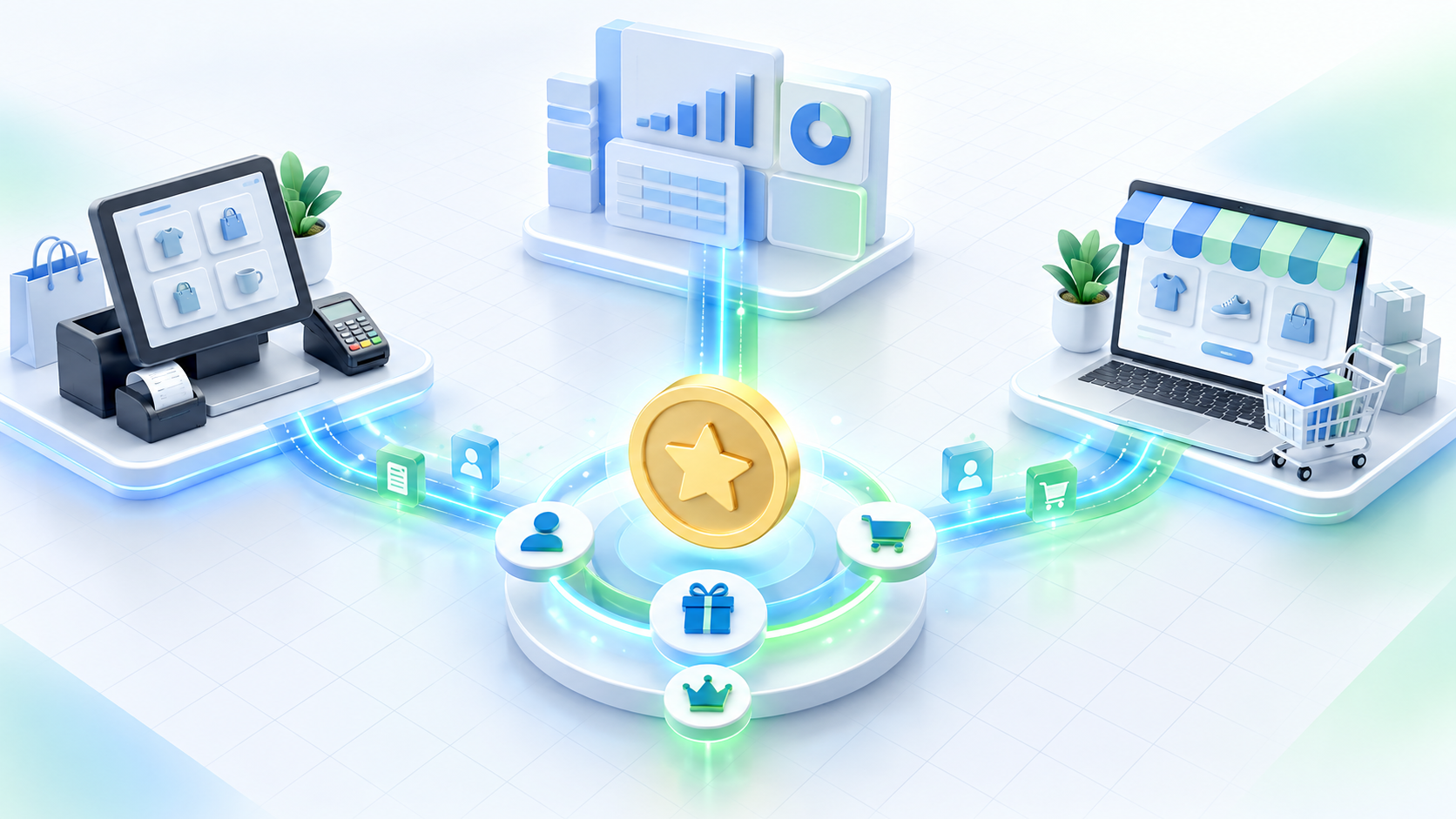
Integrating loyalty programs with ERP (Enterprise Resource Planning) systems, POS (Point of Sale) and e-commerce platforms is essential for businesses seeking to increase customer retention and optimize operational processes. This integration goes beyond exchanging information: it ensures smooth, secure and consistent communication between different technological systems.
Due to its complexity, the process requires a good understanding of the terms and context of the interactions. ERPs centralize administrative and financial data and processes, POS systems record in-person sales, and e-commerce is the digital channel. The loyalty program needs to capture and update data from these systems to grant points, benefits and promotions accurately.
Technical Fundamentals of Integration
The technical foundation is the use of RESTful APIs and Webhooks. RESTful APIs allow standardized communication between systems via HTTP requests to send, update or query data. Webhooks send automatic notifications to an endpoint whenever an event occurs, such as the completion of a sale.
Another essential concept is idempotence, which prevents repeated requests from causing duplicate effects, avoiding incorrect awarding of points. Authentication protocols, such as OAuth and JWT tokens, ensure that only authorized systems access the data, preserving security.
Mapping Data Flow and Events
Integration starts at the moment of sale. When the customer completes a purchase at the POS or e-commerce, the system triggers an event via Webhook, such as "sale completed." The loyalty platform receives this event, queries the ERP API to validate data like inventory and customer, and, after confirmation, credits the points.
For adjustments, cancellations or returns, another event flow updates the points as needed. A typical flowchart includes:
- Completed sale → event triggered → validation and awarding of points;
- Return/cancellation → event triggered → adjustment or reversal of points;
- ERP profile update → synchronization with the loyalty program;
- Periodic synchronization for manual adjustments or corrections.
Diagrams help visualize these steps, eliminating ambiguities.
Minimum Required Data and Business Rules
To ensure accurate benefits, the integration must share essential data:
- Unique customer identification: CPF, program ID or email to prevent duplication;
- Sale details: value, items, date and sales channel;
- Operation status: completed, canceled or returned;
- Program rules: points conversion rate, active promotions and limitations.
This data allows cross-referencing information and applying specific rules, such as bonuses for average ticket or extra points in categories.
Common Challenges and Errors in Integration
Integrations between distinct systems present risks that can affect results:
- Duplication: repeated processing of events, generating excessive credits;
- Inconsistency: divergence between ERP, POS and loyalty platform data, causing failures;
- Silent failures: errors that block flows without alerting operators;
- Failures in handling cancellations and returns: lack of adjustment to granted benefits.
Mitigating these risks requires detailed logs, idempotence validation and clear status feedback for each event.
Testing and Validation Strategies
Thoroughly testing the integration is indispensable. We recommend:
- Unit tests: validate each API endpoint and event in isolation;
- Idempotence tests: send repeated requests to ensure stability;
- Full flow simulation: cover processes from sale to return;
- Automated monitoring: track error and performance logs;
- Load and security testing: ensure support for expected volume and data protection.
Documenting all tests facilitates tracking and future adjustments.
Monitoring, Metrics and Maintenance
Integration requires continuous monitoring to ensure its operation:
- Failure rate per event;
- Average processing time;
- Volume of processed events;
- Complaints or manual adjustments;
- Real-time monitoring and automatic alerts.
Observability tools identify bottlenecks and failures before they impact the business.
Case Studies and Practical Examples
Platforms such as Bling, Omie, Shopify and WooCommerce offer public APIs for integration. See a simple example of an API call to grant points via RESTful:
POST /api/fidelidade/conceder-pontos
Headers: Authorization: Bearer
Body:
{
  "clienteId": "12345",
  "idVenda": "abc123",
  "pontos": 100
}
Example of a Webhook for a sale event:
POST /webhook/venda-realizada
Body:
{
  "idVenda": "abc123",
  "clienteId": "12345",
  "valor": 250.00,
  "itens": [...],
  "status": "concluida"
}
These calls demonstrate direct and effective real-time communication between systems.
Integrated Loyalty Solution
An integrated platform consolidates this complexity, eliminates rework and reduces risks. Our solution connects loyalty programs to ERP, POS and e-commerce via standardized APIs, ensures idempotence and offers detailed monitoring with intelligent alerts.
In addition, it provides specialized technical support to map flows and specific rules, facilitating maintenance and adaptation to market changes. This accelerates implementation, minimizes errors and ensures accuracy in granting benefits.
Learn about the integration hub and the public API of our platform to easily integrate with systems such as Bling, Omie, Shopify and WooCommerce.