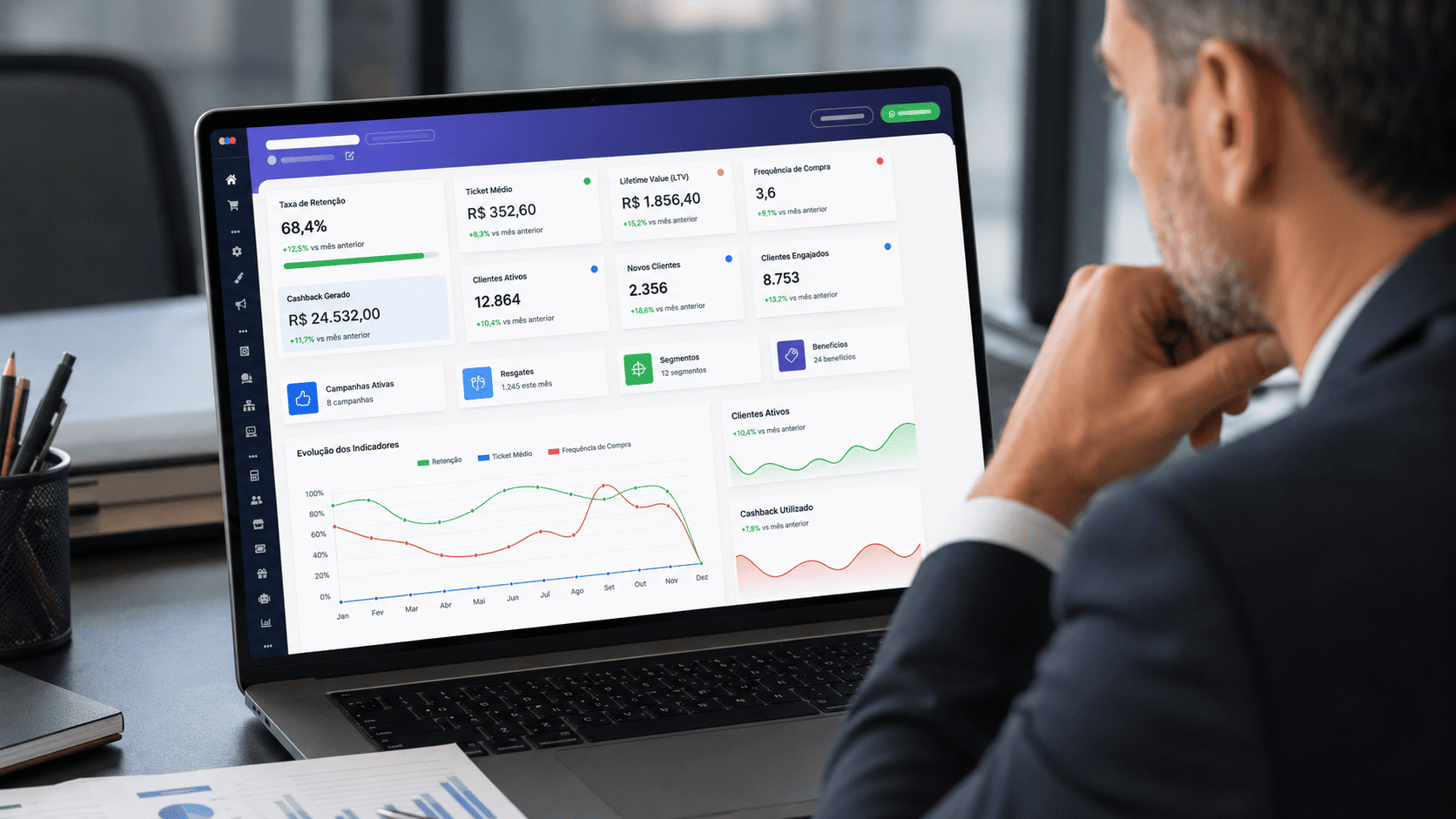
Essential KPIs for Digital Loyalty Programs: A Practical Guide to Maximize Results
In an increasingly competitive and digital market, managers face the challenge of ensuring their loyalty programs deliver real value. How do you measure whether the investment in loyalty generates concrete results? The answer is in the right KPIs, which go beyond simple numbers to provide strategic insights that guide effective decisions.
Why KPIs Are Essential in Digital Loyalty Programs?
KPIs (Key Performance Indicators) translate the effectiveness of actions into objective metrics. In digital loyalty, they reveal the true performance of strategies – from initial engagement to retention of the most valuable customers.
Without rigorous monitoring, decisions are based on beliefs, not data, undermining potential returns and alignment with business goals.
Key KPIs and Practical Applications
| KPI | Definition | Usage Example |
|---|---|---|
| Enrollment Rate | Percentage of customers enrolled in the program. | Assesses whether promotion attracts interest. E.g.: 25% of regular customers joined the program within 3 months. |
| Activation Rate | Percentage of enrollees who perform the first action, such as earning points or redeeming a benefit. | Indicates onboarding effectiveness. Example: 60% used the program on their first purchase. |
| Purchase Frequency | Average purchases per customer over a period. | Reflects engagement and behavior. Compare before and after enrollment. |
| Average Ticket | Average amount spent per purchase in the program. | Shows whether the program encourages higher spending per transaction. |
| Redemption Rate | Percentage of benefits, points or cashback used by customers. | Reveals real interest and perceived value of benefits. |
| Retention Rate | Percentage of customers active in the program over time. | Indicates success in sustainable loyalty. |
| Lifetime Value (LTV) | Revenue a customer generates during their lifetime. | Compare LTV of loyal and non-loyal customers to justify investments. |
| Return on Investment (ROI) | Relationship between financial return and program costs. | Assesses economic sustainability and indicates where to optimize spending. |
Interpreting KPIs: Signals and Strategic Adjustments
For example, high enrollment combined with low activation indicates that marketing attracts people, but perceived value or ease of use hinders engagement. In that case, simplify redemption or improve the in-app experience.
If purchase frequency does not increase despite a higher average ticket, encourage regular visits with bonuses during specific periods.
A drop in retention indicates a loss of appeal of the benefits, requiring a review of offers and personalization of rewards.
Common Limitations and Errors in KPI Monitoring
- Focusing only on isolated metrics: Evaluating only enrollment rates or raw user counts misses quality and profitability.
- Irregular data collection: Analyses without regularity do not show real trends or recent impacts.
- Neglecting qualitative indicators: Satisfaction and emotional engagement are essential to understand motivations not captured in numbers.
- Lack of context: Comparing metrics without considering program type, audience profile or seasonality leads to wrong conclusions.
Complementary Qualitative Metrics
In addition to quantitative KPIs, including NPS surveys, feedback and digital behavioral analyses adds context, identifies hidden barriers and supports more precise adjustments.
How to Implement Efficient KPI Monitoring?
- Set clear goals for each KPI aligned with the business (e.g.: increase average ticket by 10% in the quarter).
- Establish a regular cadencepreferably weekly or monthly, to track trends and impacts.
- Consolidate data into clear dashboardsmaking analyses and quick decisions easier.
- Use integrated platforms and automation to generate accurate reports and save time.
- Conduct deep periodic analyses to understand variations and plan improvements.
Practical Applications in Different Loyalty Models
In cashback programs for customersmeasuring the redemption rate of amounts is essential to adjust the offered percentage without harming margin.
Benefit clubs require attention to satisfaction and emotional engagement to ensure subscription renewals. Programs with a white-label system need customized dashboards to reflect brand identity and personalize metrics.
The use of cashback integrated with WhatsApp expands channels and requires multichannel monitoring, reinforcing the importance of advanced tools to manage KPIs.
Smartbis: Advanced Management for Digital Loyalty Programs
To keep up with the complexity of KPIs in modern programs, the Smartbis platform offers an integrated solution that automates data collection, provides customizable dashboards and generates reports aligned with manager priorities.
White label describes delivering a technology under the company’s brand; it does not, by itself, determine which dashboards or metrics will be available. Consult the white label software concept and separately confirm the reporting features offered by the solution under evaluation.
Conclusion
Measuring and correctly interpreting KPIs in digital loyalty programs is essential to ensure real and sustainable return. With regular monitoring and strategic context, these indicators reveal opportunities and alerts that optimize engagement and customer lifetime.
Specialized tools like Smartbis make this management complete and efficient, enabling companies to achieve superior results without waste. Effective loyalty is a practice guided by accurate data and coordinated actions.
Learn more about the Smartbis platform and turn your loyalty program’s KPI monitoring into a competitive advantage.