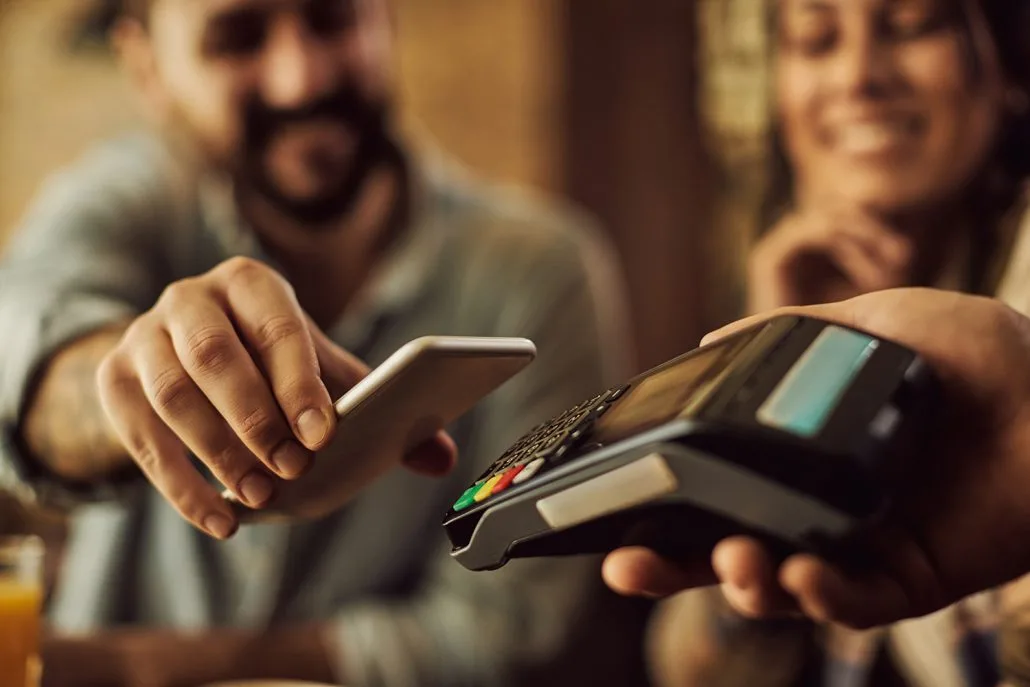
The choice depends on the operation and the audience
To choose between a digital or physical loyalty card, consider how the customer identifies themself, how the staff records purchases, the cost to maintain the program, and which data are truly necessary. A physical card may be sufficient for a simple mechanic, a pilot, or an audience with low digital affinity. The digital option tends to offer more continuity of registration, control, and measurement, but requires technology, training, data handling, and support. No format guarantees loyalty or return: the result depends on the experience, the rules, the rewards, and the execution.
What is a physical loyalty card?
The physical loyalty card is a paper, card, or plastic medium used to record participation in a benefits program. In a common mechanic, staff apply stamps, punches, stickers, or markings at each qualifying purchase. When the customer completes the required amount, they present the card to redeem the reward.
It is not a bank card. Its purpose is to show progress in the company’s program. In its simplest version, there is no associated registration: the card itself represents the balance. It is also possible to combine a printed card with some internal tracking, but that increases operation and changes some characteristics of the model.
Simplicity may favor small businesses, temporary actions, and customers who prefer in-person interaction. On the other hand, loss, damage, or forgetting the card can interrupt the journey, and manual recording requires consistent criteria.
What is a digital loyalty card?
The digital loyalty card links the participant to a registration and records accruals, redemptions, adjustments, and validity in a system. Access can occur via app, browser, PWA, digital wallet, link, QR code, or identification at service, depending on the adopted technology.
Operation also varies: entries can be manual, imported, or integrated with the sales flow. Do not assume every solution offers automation, communication, reports, or integrations. These features must be confirmed before contracting.
For a broader conceptual explanation, see what a digital loyalty card is and how it works.
Comparison table: digital versus physical loyalty card
| Criteria | Physical loyalty card | Digital loyalty card | What to check |
|---|---|---|---|
| Enrollment | Can be handed out at the counter without registration, depending on the rule. | May require registration, authentication, or access via a device. | Number of steps and audience acceptance. |
| Identification | The card itself can represent the participant. | The benefit is usually linked to a profile or identifier. | How to recover access and avoid duplicate registrations. |
| Accrual and redemption | Generally manual, by stamp, punch, or note. | Manual or connected to other systems, depending on the solution. | Validation, reversal, and unavailability rules. |
| Forgetting or loss | The customer may be unable to prove the balance if there is no parallel record. | History can remain in the registration, subject to access and recovery policy. | Procedure to recover balance in both formats. |
| Training | Requires standardization of stamps, eligibility, and redemption. | Requires correct use of the system, identification, and handling of exceptions. | Service time and ease for new employees. |
| Data | Limited when there is no registration or parallel control. | Can record history and behavior according to configuration and consent. | Which data are necessary, exportable, and reliable. |
| Communication | Depends on other channels or on information printed on the card. | Can connect to digital channels if the solution provides it and there is a legal basis. | Consent, frequency, and available resources. |
| Personalization | Visual is defined in the print; changes may require a new run. | Interface and rules can be configurable, depending on the vendor. | Limits of editing, timing, and cost of change. |
| Fraud and error | Subject to fake stamps, erasures, and manual discrepancies. | Subject to account abuse, improper entries, access failures, and digital fraud. | Permissions, auditing, dispute, and prevention. |
| Privacy | Can operate without personal data, but parallel controls change this scenario. | Normally involves processing personal data. | Need, purpose, security, and data subject rights. |
| Dependencies | Materials, card stock, stamp, and in-person process. | Vendor, device, connectivity, and system availability, depending on the flow. | Contingency plan for interruptions. |
| Scale | More participants may require more printing and control. | Capacity depends on the plan, architecture, support, and operation. | Limits, variable costs, and performance. |
The table compares operational trends, not universal promises. A physical card associated with registration can generate data; a poorly configured digital system can generate incomplete records. Implementation is as important as format.
Initial and recurring costs
Comparing only printing with subscription distorts the decision. Total cost should include implementation, materials, technology, staff hours, training, support, communication, rewards, losses, and maintenance.
Possible costs of the physical card
- artwork creation, proofing, and printing;
- stamps, stickers, or other validation materials;
- storage, distribution, and reprinting;
- service time and manual verification;
- replacement or compensation for loss and discrepancies;
- parallel tracking, if the company wants to measure the program.
Possible costs of the digital card
- configuration, implementation, and eventual migration;
- subscription, charging per participant, unit, use, or message;
- integrations, customization, and support;
- training and handling exceptions;
- security, privacy, and data governance;
- maintenance of the registry and communication.
There is no universal “low”, “medium”, or “high” cost range. Project for the same period and volume, including growth and contract termination. Also add the cost of rewards, which exists in any format.
Customer experience and ease of enrollment
The physical card can be immediate: the company hands over the card and explains the rule at the counter. This favors a short and visual mechanic. However, the customer must keep and present the card unless there is an alternative identification method.
The digital card can keep balance and rules accessible and allow recovery via registration. On the other hand, long forms, passwords, mandatory downloads, device incompatibility, or connectivity difficulty can deter part of the audience. Some solutions work in the browser or without an app; others do not.
Test both journeys with real customers. Measure enrollment time, questions, abandonment, forgetting, and success on the first redemption. Convenience should be observed, not assumed.
Control, data, and measurement
A physical card without registration shows how many cards or rewards were distributed, but not necessarily who participated, how much they bought, or whether they returned. To obtain those answers, the company needs to add some record, even if manual.
In digital, actions can be linked to the customer and form a history. This expands analysis possibilities but does not guarantee correct data. Duplicate identifications, unrecorded sales, missing reversals, and incomplete integrations harm metrics.
Before choosing, list the decisions the data need to support. If the company only wants to offer a gift after a few visits, simple tracking may suffice. If it needs to compare cohorts, costs, frequency, and redemption between units, digital traceability tends to be more suitable.
Fraud, privacy, and security
No format eliminates fraud or error. For physical, risks include fake stamps, erasures, card transfer, and granting without eligible purchase. Possible controls include exclusive stamps, hard-to-reproduce markings, checking the date, and rules for replacement.
In digital, duplicate accounts, shared access, operator manipulation, improper entries, and exploitation of flaws can occur. Evaluation should consider access control, change logs, limits, transaction validation, dispute process, backups, and incident response.
The physical card can operate without identifying the holder. Digital usually processes personal data. The company should collect only what is necessary, explain purposes, protect access, and attend to rights provided by the LGPD. Promotional communication also needs to respect the legal basis and customer preferences.
When to choose the physical loyalty card
The physical format may make sense when:
- the mechanic is short, simple, and limited to a single point of service;
- the program will be tested for a short period or a small audience;
- customers show low adoption of registrations or digital channels;
- the company does not need to identify participants or analyze individual behavior;
- the operation can standardize marking, verification, and redemption;
- the consequences of loss and fraud are small and covered by the rules.
The choice does not exempt planning. Define eligible purchases, validity, treatment of lost cards, reward items, and responsibility for the stamp.
When to choose the digital loyalty card
The digital format tends to make sense when:
- the customer needs to check balance, statement, validity, or rewards;
- the company wants to link transactions and redemptions to the same registration;
- there is more than one unit or sales channel;
- volume makes manual control difficult;
- enrollment, activation, frequency, and redemption data will be used in management;
- the staff can operate the system and handle exceptions;
- costs, security, privacy, and portability have been evaluated.
If the decision involves contracting, consult the criteria to choose a loyalty platform. Confirm features and limits directly with each vendor.
When to use a hybrid transition
A hybrid phase can reduce friction when part of the base uses the physical card and part is ready for digital. It can also work as contingency or migration period. However, maintaining two independent balances increases the risk of duplication and divergence.
To migrate without losing balances and rules:
- define a cut-off date and coexistence period;
- communicate what changes and what remains;
- establish how the physical balance will be proven and converted;
- link each conversion to a registration and record the origin;
- render the converted card unusable or mark it to prevent duplicate use;
- preserve validity and equivalence, or explain in advance any change;
- test migration, reversal, redemption, and support before scaling;
- keep an auditable record of corrections.
Hybrid does not mean all vendors offer integration between paper and system. Often, the company will need to define a temporary operational procedure.
Checklist to decide
- What behavior does the program intend to encourage?
- How often does the customer buy?
- Does the audience prefer paper, browser, app, or identification at service?
- Which steps can cause abandonment?
- What data are necessary to operate and decide?
- How will accrual, redemption, cancellation, and reversal be handled?
- Does the program need to work across more than one unit or channel?
- Which frauds and errors are plausible for each format?
- How will the customer recover balance or dispute an operation?
- What is the total cost over 12 months at the expected volume?
- Does the team have capacity to train, support, and measure?
- How will data be protected, exported, and deleted?
- Is there a contingency and termination plan?
- Would a pilot or hybrid implementation reduce risk?
The best format is the one the company can sustain
The physical card favors simplicity and in-person contact; the digital card can expand continuity, control, and measurement. Those advantages only appear when matched with the audience and operational capacity. Compare total cost, test the journey, and choose the level of technology needed for the current objective.
If, after the checklist, the digital model makes sense for your operation, learn about the digital loyalty card for businesses from Smartbis. Evaluate the solution considering the rules, channels, and the specific needs of your business.